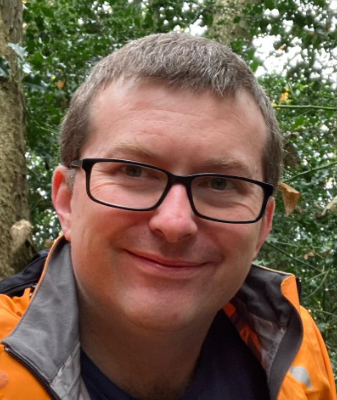
I took a somewhat scenic route to neuroscience, first starting out as a mechanical engineering student for a few years before dropping out of study altogether, and starting again. I eventually completed an undergraduate degree, MSci (hons) in Neuroscience at the University of Glasgow in 2006. This degree included a year in the pharmaceutical industry, where I carried out schizophrenia research at Merck, Sharp and Dohme (the UK subsidiary of Merck & Co) in Harlow, Essex. As an undergrad, I took an early interest in network activity, carrying out an in vivo electrophysiology project with John Riddell.
After finishing my undergraduate degree, I moved to the University of Oxford to study on a four year Wellcome Trust DPhil in the OXION programme, working with Ole Paulsen and Louise Upton, graduating in 2011. I deepend my interest in network activity in Oxford, carrying out a project studying how GABAergic inhibition could shape slow network oscillations using patch clamp recordings. In the final year of my doctoral studies, Ole Paulsen moved to the University of Cambridge to take up the Chair of Physiology, so after completing my DPhil, I spent a few months in Cambridge before moving to the National Institutes of Health (Bethesda, USA) in 2011, to work as a Postdoctoral Visiting Fellow in the group of Dr Chris McBain. At NIH, I worked on various aspects of interneuron circuit development and the role of interneurons in generating network oscillations, working in the hippocampus for the first time in my career.
I moved back to the UK in early 2016 to establish my research group at the University of Exeter on an early career fellowship funded by the Vandervell Foundation. In setting up my own lab, I developed strong interests in how thalamus mediates communication in the extended memory circuit, which includes prefrontal cortex, hippocampus and entorhinal cortex. I also became interested in translational research, developing projects in dementia and those relevant to schizophrenia. I was very lucky to receive early funding from BBSRC, Alzheimer’s Research UK, Wellcome Trust and MRC which really helped launch my research group (and set up unrealistic expectations of grant funding success…).
After my fellowship, I took up a Senior Lecturer posititon at the University of Glasgow in 2020, and would thoroughly recommend not moving a lab or city during a global pandemic. I broadened my research focus again in Glasgow to incorproate neuroinflammation, working as a founder member of the Translational Neuroinflammation Group, working closely with colleagues in immunology to study the relationship between brain inflammation and mood disorders in projects spanning fundamental science and clinical work. I also took up an Honorary Clinical Scientist role in the NHS working in neurophysiology, and my work continues to benefit from bidirectional flow of ideas between translational and fundamental projects.
 Craig Lab